Ayurvedic Skin Care
Ayurvedic Skin Care
(March, 2011)Ayurveda may be a 5,000-year-old approach to holistic health, but its message strikes a refreshing tone in today’s culture. “Ayurveda emphasizes beauty from within, a beauty that comes from health and well-being, not from cosmetics or anything that tries to cover up the true you,” explains Reenita Malhotra Hora in her book Inner Beauty. “Part of beauty and feeling beautiful is to accept and love ourselves as we are,” says Amber Vitse, ACN, an Ayurvedic practitioner who works on many projects with Nature’s Formulary. “Ayurveda supports that tremendously.”
Literally translated as “the science of life,” Ayurveda is the belief that there are three basic energies that make up a person’s constitution: vata, pitta, and kapha. Vata correlates to air and space, pitta to fire and water, and kapha to water and earth. Each person is born with an essential nature, or constitution, which is expressed through these doshas. Most generally have a primary and secondary dosha, with the third being less prominent. The balance or imbalance of these doshas plays a role in how we look and feel.
A Balancing Act
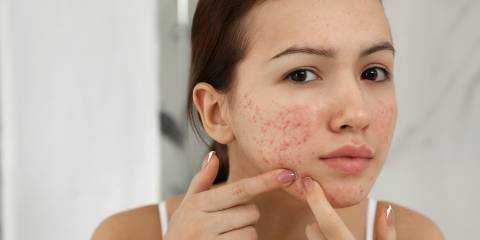
When doshas are in a state of equilibrium, we experience a sense of well-being. But when stress, improper diet, or other influences tip us out of balance, the body lets us know. Too much vata, for example, can lead to fine lines and wrinkles, chapped lips, or rough patches of skin (including eczema and psoriasis). Pittas, who typically have rosy complexions, can break out in acne and rashes. Imbalanced kapha may cause clogged pores and whiteheads.
“If your skin is feeling normal, use any treatments for your dosha that appeal to you,” advises Hora. “If your skin is feeling unhealthy or showing signs of imbalance, enlist those treatments that target the problem: If dryness is your issue, for example, focus on moisturizing treatments that balance vata.”
Daily Routine
Important in Ayurveda is a daily routine that includes abhyanga or self- massage with oil, ideally oil infused with herbs. Look for products already formulated with beneficial ingredients or make your own massage or bath oils.
Daily oiling of the skin is nothing short of life changing, says Trinity Ava, director of herbal education at Organix-South. A former professional ballet dancer, she experienced wracking aches and pains in her early 20s. Daily oiling of the body dramatically improved her symptoms. Now 38 and still very active, she enjoys a feeling of lightness in her joints that she didn’t have before. “It’s feeding the body from the outside in,” she says.
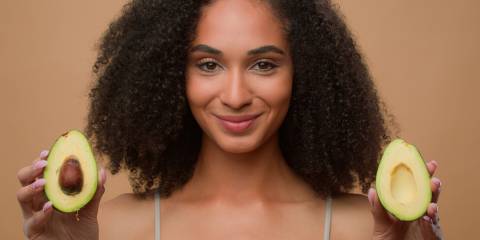
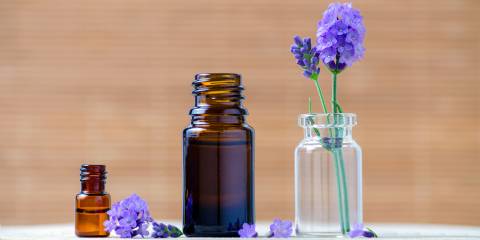
For vata types, Ava recommends warming herbs and strengthening oils. “Use oils infused with ashwagandha, ginger, black pepper, and gotu kola,” she says. “Apply oils ideally when they are slightly warm.” And try calming essential oils (rose otto, neroli, rose geranium, and lavender) with heavier oils (olive, almond, avocado or ghee [clarified butter]).
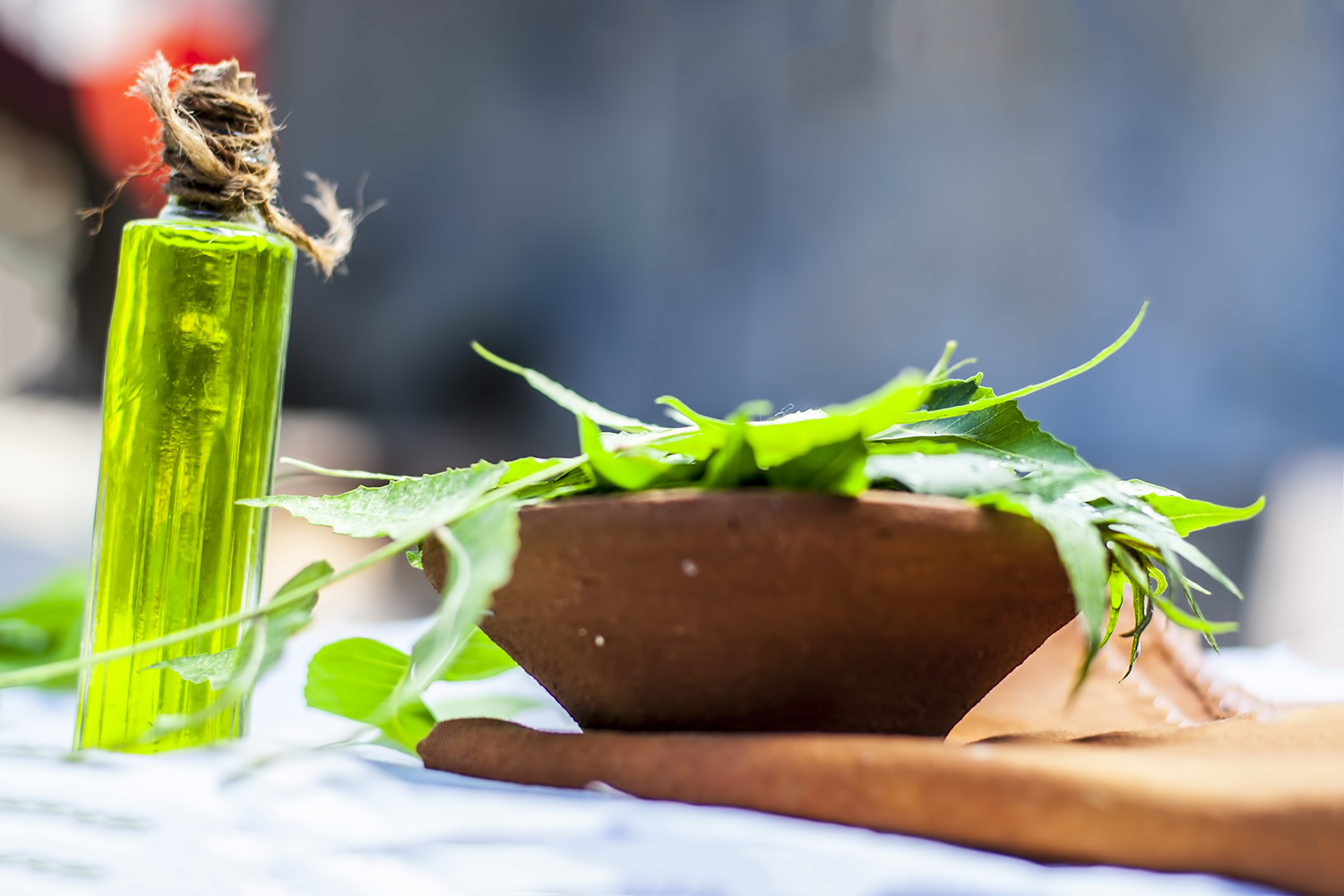
For pitta imbalance, P. K. Dave, president of Nature’s Formulary, recommends essential oils like rose otto, peppermint, or geranium. Also consider cooling coconut oil and aloe vera in beauty products. Ava advises pittas to try herbs including gotu kola, turmeric, and neem (known for its skin-healing properties) along with lavender, Moroccan chamomile, red mandarin, and clary sage oils. She suggests 10 percent neem oil diluted in 90 percent of ghee, coconut, sesame, or sunflower oils.
Kaphas can “use a light carrier oil with stimulating and energizing essential oils such as cinnamon, lemongrass, or cumin,” says Dave. “Kapha types should always precede the massage with vigorous exfoliation with a dry brush or loofah.” (Actually, a gentle dry brushing before massage helps all doshas.) Ava recommends herbs like rosemary, holy basil, sage, turmeric, and ginger, along with essential oils of cardamom, ginger, grapefruit, and pine. The best heavy oils are mustard seed, almond, or sesame oils as well as ghee.
She recommends that all three doshas make or buy herb-infused oils as a way to experiment and see what works best. “No one herb is limited to only being beneficial to one dosha or constitution,” Ava says. “The number one rule is to listen to your body and preferences and notice what feels right for you.” Also consider using organic or ethically wild-crafted herbs whenever possible, as anything applied to the skin is absorbed into the body.
While you can take our quiz to get a better idea of your dosha, some general guidelines may provide you with clues. For example, vata types tend to have dry skin, dry hair, and a tendency toward rough hands with fingernails that break easily. Pitta types are prone to sunburn, hives, and rashes. Kaphas often experience oily skin, large pores, and facial puffiness.
QUIZ: Which Docha(s) Dominate?
Circle each word that typically describes you or the challenges you face. Add up your points to see which dosha(s) dominate. Your secondary dosha will be your second-highest score.
Vata
Slender
Dry hair
Brittle nails that break easily
Social
Anxious
Cold
Constipated
Dry skin
Fine lines
Dandruff
Popping joints
Rough hands
Easily aggravated by cold and dry climates
Total:__________
Pitta
Medium physique
Straight hair
Flexible fingernails
Angry
Itchy skin
Easily irritated skin
Sunburns easily
Hives
Bleeding cuticles
Rashes
Acne
Freckles
Easily aggravated by heat
Total_________
Kapha
Large-boned
Thick hair
Smooth fingernails
Laid-back
Withdrawn
Slow-paced
Soft skin
Sweaty
Sluggish
Oily skin
Clogged pores
Facial puffiness
Easily aggravated by cold, damp, and gray conditions

Total:_________
SELECTED SOURCES
Ayurveda for Women by Dr. Robert E. Svoboda ($14.95, Healing Arts Press, 2000)
“Basic Principles of Ayurveda Examined” by M. Oppel, MS, HerbClip, 8/08
“Herbal Face & Scalp Massage” by Karta Purkh Singh Khalsa, Massage & Bodywork, 2003
Inner Beauty by Reenita Malhotra Hora ($19.95, Chronicle Books, 2005)
Personal communication: Trinity Ava, herbalist and director of herbal education, Organix-South; P. K. Dave, president, Nature’s Formulary; Amber Vitse, ACN and Ayurvedic practitioner, 1/09
“Utilization of Ayurveda in Health Care: An Approach for Prevention, Health Promotion, and Treatment of Disease” by H. Sharma, MD, FRCPC, et al., Journal of Alternative and Complementary Medicine, 11/2007
About the Author

Lynn Tryba is the editor-in-chief for Taste for Life magazine. Over the past 20 years, her journalism has appeared in Psychology Today and Robb Report, among other national magazines.


real beauty of life
Hi,
I definitely agree that the beauty of life depends on how we look at it. Part of being beautiful is accepting and loving who we are and be contented with what we have but still hopeful.
One thing we also need to be reminded of is that the beauty of life does not really depends on how happy we are but on how happy others can be because us. Have you ever tried helping other people you don't or extreme stranger to you? You may try it and you'll see what real beauty and happiness is.